When you’re building a new home in Melbourne, it is a blank slate for whatever you want. Three bedrooms, two bathrooms, open plan living, and a fireplace are all great ideas to include. While you can worry about the size of your bedroom and bathroom, those are easier decisions to make. What kind of fireplace to install, where to install it for maximum impact, and do you need more than one? These are questions that need to be answered by an expert.
The options for heating your home are many, but if you’ve chosen a fireplace for aesthetic reasons or design reasons, you need to make some unique decisions. In this article, the team from Jetmaster Heat & Glo, the premium fireplace store in Melbourne, have put together the six most important decisions you need to make.
If you think of any other questions relating to fireplaces and where they would look best in your home, call our team on 1300 219 875 and we can give you some good advice.
Decision 1- At What Stage do you put a Fireplace Into Your Plans?
The type and location of your fireplace(s) should be integrated into your home design at the very beginning. The location of your fireplace can dictate structural load, framing requirements, ventilation and more, something which would cost a lot of time and money to retrofit and adjust once building has begun.
Planning and Design Phase
The fuel type for your fireplace has implications on the design.
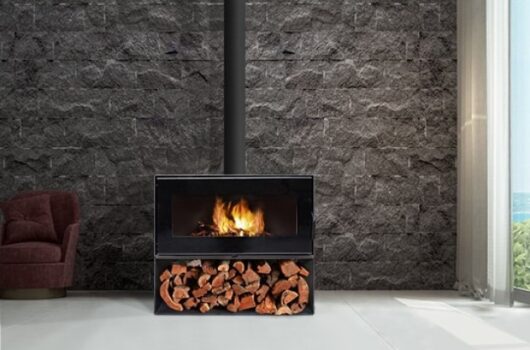
A wood powered fireplace requires a hearth and chimney and potential storage for wood in the house.
A gas powered fireplace needs flue venting and gas lines to feed the fire.
You also need to design the layout of the fireplace zone, and any clearances. Each fireplace option carries different clearance requirements, so careful research is essential to ensure adequate clearance from combustible materials is maintained. If you need any help with this, don’t hesitate to contact Jetmaster.
Framing and Construction
During the framing of your home, carpenters can build the framed wall that will hold the firebox. Here they can incorporate the necessary design elements and clearances for your fireplace.
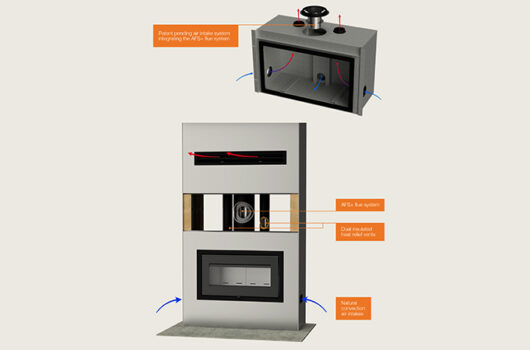
For a gas fireplace you can rough in the gas lines, the flues and any electrical hardwiring before the walls are closed up.
Internal Fit-out
Once all the framing is done you can install the fireplace, get the firebox sitting right, install the venting and flues.
The final touch are the ‘non-combustibles’, such as a stone or brick finish, a mantlepiece and other such additions to make your fireplace the focal point of the room.
Decision 2- Gas or Wood fireplaces?
The choice between gas or wood really comes down to convenience versus ambiance. Gas fires give you effortless controlled heating, while a wood fire gives you a crackling atmosphere. Let’s plot out the pros of each.
Wood Fireplaces
Ambience. Nothing compares to the warmth and crackle of a wood fire. There is the smell of burning logs, the meditative act of building the flame, and a visual style of flickering flames.
Heating. Wood burning fires can produce intense, radiant heat, great for large open spaces. And they are wonderful in cold environments.
Sustainability. If the wood is sourced responsibly, then it is a highly renewable resource and carbon-neutral.
Resilience. If the power goes out, or if there is a gas shortage, your wood burning fire will continue to crackle away and keep you warm.
Gas Fireplaces
Convenience. Instant warmth with the push of a button. Can even be controlled with a smart home system. No need to chop wood or labour away to light the logs.
Maintenance. Almost mess-free. No need to clean a chimney, or clean ash from the fire box. Just a wiping down of the fireplace itself, as if it was another appliance in your home.
Efficiency. Gas fires are highly energy efficient. Most gas fireplaces convert all of their fuel into usable heat.
Design Flexibility. Gas fireplaces can be installed in many more rooms than a wood-burning fireplace. Ventless or balanced-flue options allow you design freedom.
Things to consider:
Many modern estates and local councils in Melbourne place restrictions on wood-burning fireplaces due to smoke and emissions.
Storage Space. Wood-burning fireplaces need space to store wood, and to keep it dry.
Gas fireplaces can be more expensive to purchase and install, so high costs upfront. Wood heaters need ongoing costs to buy wood.
Decision 3 – Where to Place Your Fireplace for Maximum Impact and Heating
Where you actually locate your fireplace is important. You want to consider visual impact as well as the power to warm the room.
Central Open Plan Concept
A fireplace, or similar to a firepit, in the middle of an open plan room, where people can sit around the fire is a bold statement. It is visually stunning and the heat can radiate in 360 degrees, all around the room.
Living Room Wall
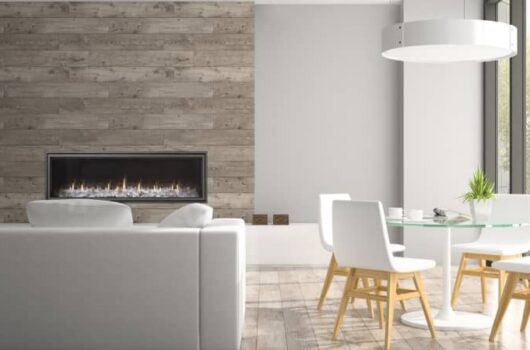
This can essentially be the ‘feature wall’ of your living room. Your eye is naturally drawn to the fireplace that can have a mantle above it with photos or trophies. Heat is directed into the room. Having the fireplace on an interior wall prevents heat radiating to the outside through exterior masonry.
Corner Placement
Squirreled away in the corner of the room can be a design choice. It frees up floor space and is a good choice when wall space is at a premium. There can be a good amount of radiant heat as it can bounce off two walls, being in the corner.
Indoor-outdoor Double-Sided.
This is a bold design choice and creates a very dramatic focal point. Built into an exterior wall, you can heat the interior space and warm the exterior space simultaneously. While delivering dual-zone heating, you need to insulate the outdoor environment else a lot of heat will be wasted not felt.
When placing your fireplace inside, consider factors such as traffic. You don’t want the fireplace to be a tripping hazard, and you need a good distance between the firebox and any furniture.
Speaking of which, there are regulations in Australia regarding minimum distances of combustibles from the fireplace.
Also be aware of the ventilation required for either type of fireplace. While having a fireplace on an internal wall saves you from losing heat to the outside, you might not be able to accommodate a chimney and flue arrangement for proper ventilation.
Decision 4 – Double-Sided Fireplace for Open-Plan Living?
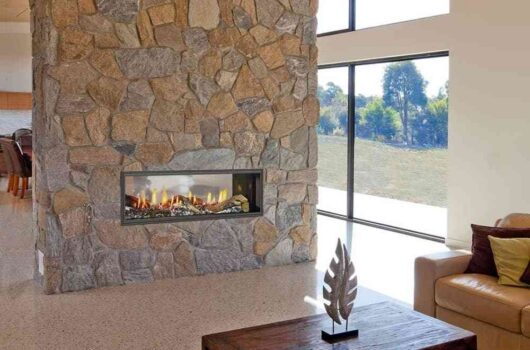
Taking a step up from the open plan living option above, you could choose a double-sided fireplace for such a living space. It is a stunning visual landmark in your home and certainly a feature people would want to congregate around. You could have a dining space one side and the lounge space the other, separate areas but connected thematically with the fireplace.
There are some considerations to make if you’re having an open-plan, double-sided fireplace such as furniture placement, how the heat will be distributed and the unique venting and framing that will need to be constructed.
Decision 5- Built-in or Freestanding?
This decision between a fireplace built into the walls, or freestanding in the room, depends on available floor space, what aesthetic you’re looking for in your home and how you want your home heated.
Built-in Fireplaces
Has a clean, streamlined look to it. Great to have below a wall-mounted TV unit or surrounded by custom cabinetry.
Minimal space requirements as it is set into the wall. Great for narrow townhouses.
They are remarkably safe as the walls provide excellent fireproofing.
They do require extensive framing and structural planning for the supporting walls.
Freestanding Fireplaces
Radiates heat from all sides, great for gathering around.
They are easier to install as they don’t require framing or modifications to any walls. As long as you have room for a flue, you can place them anywhere.
They can make a bold, sculptural centrepiece, becoming more than just a heating source.
They do take up floor space and must abide by strict clearance codes.
Decision 6 – Just an Indoor Fireplace or Have Both an Indoor and an Outdoor?
Have you ever thought about an outside fireplace? At the design stage of your home build, you get to plan everything, including your ultimate outdoor entertaining space, and it could include a fireplace. It certainly makes a focal point and a place around which to gather long into the night.
Having both an outdoor and indoor fireplace means all year round entertaining. Once it gets too cold outside, you can retreat inside and still have the ambience of a roaring fire. If you can match both the outdoor and indoor fireplaces it can create a wonderful, seamless transition from one entertaining space to another.
Another thing to consider is property value. A well conceived outdoor entertaining space, with a feature fireplace, will certainly increase the resale price of your home, if you so choose.
Why New Home Builders in Melbourne Should Choose Their Fireplace Before They Pour the Slab
Knowing what type of fireplace and where you’re going to place it in your home, is important to know before you pour the concrete slab.
Support for Heavy Fireplaces
If you have stone or cast-iron fireplaces or mantles, this can be a heavy object that needs extra support. The builder needs to cast a reinforced slab in this area to cope. Alternatively, if you have a flush, or raised hearth, the slab needs to be formed up accordingly during the pouring phase.
Structural Framing
Fireplaces require specific safety clearances from combustibles like timber framing. Knowing the exact dimensions of the fireplace prevents delays while framing.
There are also flue and venting requirements which the framing needs to accommodate for, such as a chimney.
Concealed Utility Rough-Ins
For a gas fireplace, a gas line needs to be roughed out of a slab in the exact position before the slab is poured. The same goes for any electrical lines to power things like ignition switches and fans. You can conceal them by pouring the slab afterwards.
Get It Right From the Start and Visit Jetmaster Heat & Glow, a Melbourne Fireplace Store, at the Planning Stage
Building a new home is one of the biggest investments you will ever make and the choices you make at the planning stage will shape how you live in that home for decades to come. A fireplace is not an afterthought. It is a centrepiece of your home and needs serious consideration. It can be overwhelming thinking about placement, framing, and what needs to happen before your slab is poured.
The good news is you don’t need to worry about it on your own. The team here at Jetmaster Heat & Glow are Melbourne’s fireplace experts. We can work with you, your architect and your builder, to make sure you have the right fireplace for you and for your home. Visit our showroom in Richmond to view our range or drop us a line to talk with our team about indoor fireplaces, outdoor heating options, and if wood burning fires or gas fireplaces are the right option for you.
 444 Swan St, Richmond, Melbourne, VIC 3121, Australia
  Sales: 1300 219 875