An electric fireplace gives you the timeless appeal of a flickering flame without the wood, the flue or the cleaning up. It’s also one of the simplest heaters to live with: flick a switch and the room starts to warm. But how does it actually work, and what will it add to your power bill?
This guide explains how electric fireplaces create both the flames and the heat, what they cost to run, and how they compare with gas and wood. If you’re browsing fireplace stores in Melbourne, it’ll help you know what to ask before you buy.
How Do Electric Fireplaces Work?
Unlike gas heaters or wood-burning fireplaces, electric heaters don’t burn any fuel. There is no need for a flue or a chimney. Instead, they create an optical illusion to mimic that real fire feeling and look.
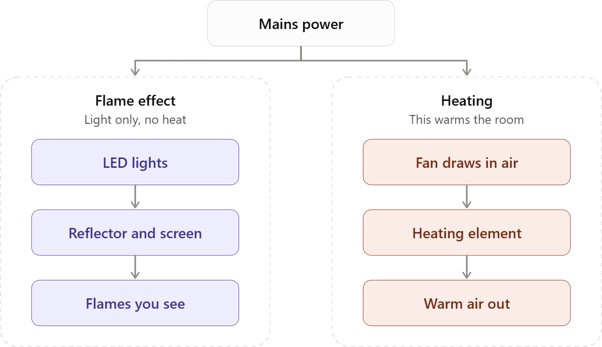
Most models use LEDs and rotating mirrors to imitate firelight. As the light bounces off the reflective surface of the rotating mirror, it scatters off a translucent screen creating the illusion of firelight.
Premium electric fireplaces can play high-definition video loops of real fire on an LCD panel. Others can illuminate a fine water mist to create a 3D-looking fire effect.
The heating element works like any other kind of electric space heater:
Heating element: Electricity passes through a tightly coiled metal wire (nichrome resistance wire), heating it up instantly.
Blower fan: A small internal fan pulls cool room air over the hot coils and pushes the warmed air outward into the room. Some premium models use infrared quartz elements to radiate heat directly to people and objects rather than just blowing warm air.
Flame-only mode: Because the visuals and the heater run on separate circuits, you can turn off the heating element entirely to enjoy the light display during warmer months.
An electric fireplace’s flame effect and heater run as two separate systems.
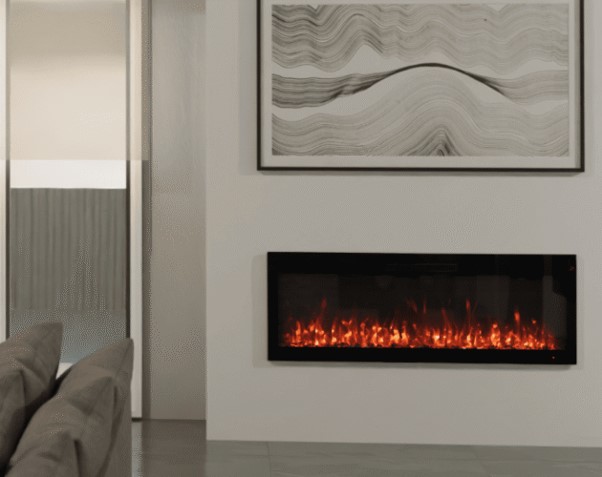
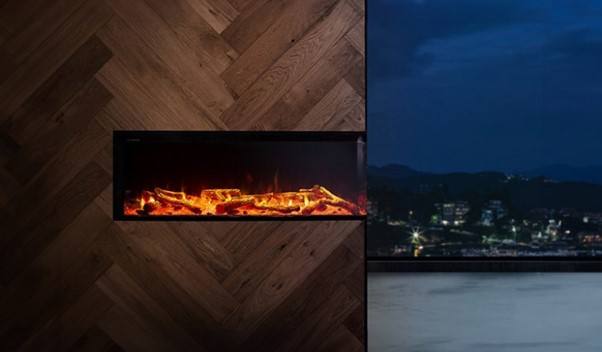
The VisionLINE Linear has a streamlined, modern design that suits almost any room. Its heating elements aren’t very powerful, so it can take a long time to warm a living space.
That makes it a good choice for adding gentle, supplementary warmth rather than heating a large space on its own.
VisionLINE View
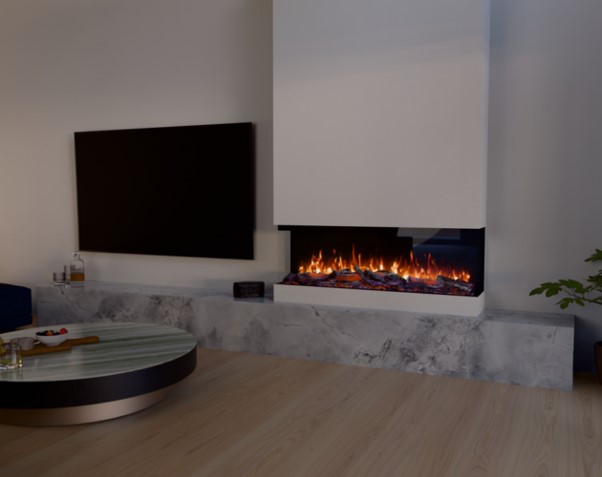
The VisionLINE View is built around a wide, panoramic view of the flames. It comes in three sizes, so it can suit anything from a snug living room to a larger open-plan space.
E660 and E800 LED
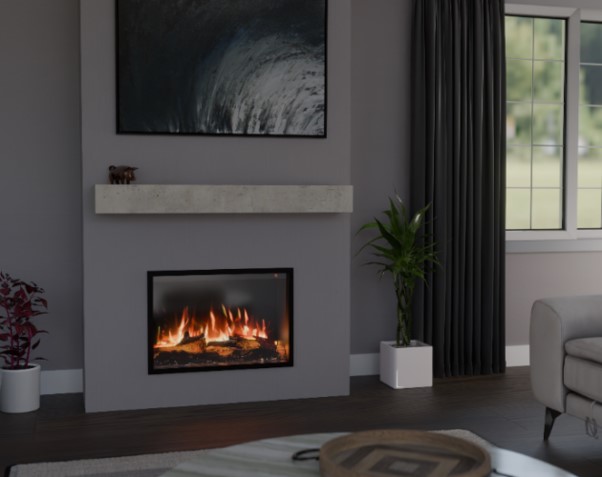
The E660 and E800 are built to slot into an existing fireplace opening or new construction, and are designed for the Australian market. They have backlit, semi-translucent logs, a pulsing ember bed and HD RGB LED flames with a choice of colour mix.
A remote controls flame intensity and colour, fan, heat level and timer, and Wi-Fi app control is standard. Heat comes out through concealed vents, and slim or larger trims are available. The E660 is about 694mm wide and the E800 about 830mm.
FS-500 Freestanding
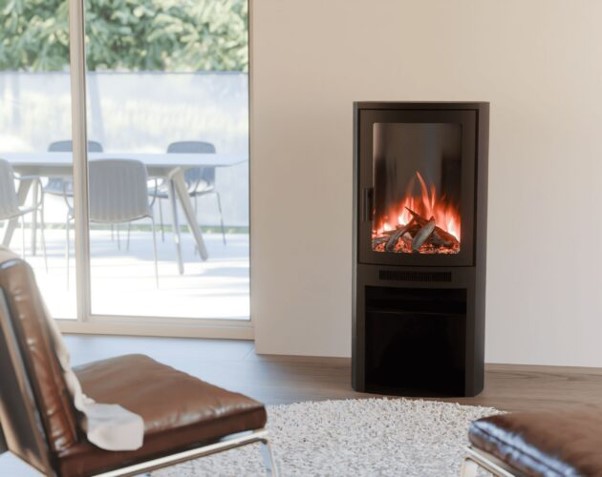
The FS-500 is a compact, European-style freestanding electric fire, with a footprint of 500mm wide and 387mm deep, so it suits smaller spaces. It has HD RGB LED flames over an integrated ember bed, 2kW of built-in heat, and remote and Wi-Fi app control as standard. It comes with standard legs or an optional wood stack.
Do Electric Fireplaces Actually Heat a Room?
Yes, electric heaters can heat a smaller room very well. However, they work best as a supplemental zone heater rather than a primary whole-home source of heat.
Most electric heaters use a heated metal coil and a small internal fan to spread the hot air out into the room. A typical 1,500W unit can produce around 5,000 BTUs of heat, similar to a portable space heater. This sized heater can comfortably warm a small room.
One of the best things about an electric heater is that it converts nearly 100% of electricity into heat, with none of that heat lost through a chimney. Furthermore, the outer glass panels remain cool to the touch, which makes them safe around younger children and pets.
What Does an Electric Fireplace Cost to Run?
Running costs depend on whether you’re using the flames alone or the heater as well. At around 27 cents per kWh, a typical Melbourne rate*, here’s what to expect:
Flame effect only (no heat): Uses about 5 to 100 watts, similar to a light globe, and costs roughly 0.1 to 3 cents per hour.
Low heat (750W to 1,000W): Costs roughly 20 to 27 cents per hour.
High heat (1,500W to 2,000W): Costs roughly 40 to 54 cents per hour.
*Cost per hour is the unit’s power in kilowatts multiplied by the price per kWh. For example, a 1,500W heater is 1.5 kW, and 1.5 × 27c comes to about 40 cents per hour. The 27c rate is a mid-range figure. Regulated Victorian Default Offer rates for 2026-27 run from about 26c to 32c per kWh depending on your network, and your retail plan may differ, so your own cost per hour will vary.
A couple of ways to save on running costs:
Only heat the room you’re in. This is called zone heating. There is no need to heat the whole house if you’re going to be spending all night in the living room.
Solar integration. Running the heater during daylight hours on rooftop solar can cut the cost, and battery storage lets you use stored solar in the evening too.
Electric vs Gas vs Wood: Running Costs Compared
When compared to gas heating or a wood-burning fireplace, how much does an electric fireplace cost to run?
Running Costs at a Glance
Electric fireplace
Gas log fire
Wood heater
Cost to run
About $0.40 at 27¢/kWh
About $0.70 to $1.20 per hour, depending on gas tariff
About $0.07 to $0.17 per hour (firewood at $120 to $300/m³)
Cost per kW of heat, per hour
About 27c
About 9.5c to 14c
About 5c to 11c
Efficiency
Around 100% of electricity converted to heat, but resistance heating costs more per MJ than reverse-cycle air conditioning
70% to 90% for modern units
70% to 85% for modern slow-combustion heaters
Best for
Small to medium rooms, zone heating, apartments, low setup cost and no maintenance
Fast, powerful whole-room heat with real flames, though gas prices fluctuate
Maximum radiant heat, and lower running costs if you have cheap or free wood
* Real wood heaters run at a higher output than 1.5 kW, so a typical burn costs more per hour than this. The table is only a fair comparison at equal heat.
A few things to consider:
Upfront installation costs for an electric heater are much lower than installing a gas or wood heater. The latter two require professional installation with a flue and chimney, or a gas-line fitting, while an electric heater is pretty much plug-and-go.
Electric heaters require very little maintenance or cleaning, and VisionLINE electric fireplaces come with a two-year warranty. Wood heaters require a regular chimney sweep, ash cleanup and a constant supply of chopped wood, though some models have much longer warranties, such as 10 years on the VisionLINE Pera. Gas heaters require regular maintenance and check-ups for carbon monoxide leaks, and Heat & Glo gas fireplaces such as the SLR-X come with a limited lifetime warranty.
Electric Fireplaces in Melbourne
You don’t have to live near our Richmond showroom to get an electric fireplace from Jetmaster. The FS-500 is easy to plug in and start using straight away, and we can deliver and install across Melbourne, including outer suburbs like Lilydale, Ferntree Gully and Hampton.
Electric fireplaces need no flue or chimney and no changes to your home’s structure, so installation is far more straightforward than for wood or gas. For built-in models, our team handles it from start to finish, so the unit is positioned, connected and ready to run when we leave.
To see the range in person, visit our Richmond showroom at 444 Swan St, or get in touch and we’ll talk you through the right model for your home.
Yes. All gas units must be fitted by a licensed gas fitter, and installation that doesn’t follow the manufacturer’s specifications can void the warranty.
How often should I have my fireplace serviced?
We recommend a routine service and clean every two years for gas fireplaces.
How do I book a service?
Fill out the service form on our website. You’ll need your fireplace’s model and serial number, which are usually on the front cover of your owner’s manual, or your purchase invoice will show the model.
What warranty do you offer?
Our fireplaces come with industry-leading warranty coverage. Contact our service team to check what applies to your model.
 444 Swan St, Richmond, Melbourne, VIC 3121, Australia
 Sales: 1300 219 875